Spring in Maryland usually brings a steady pattern of rain along with a rise in temperatures. And while most homeowners associate seasonal rainfall with greener lawns and rising creek levels, it can also have a direct impact on the quality of your home’s well water.
Because water quality can fluctuate significantly during the spring months, it’s important for you to stay aware of potential changes. Knowing what to watch for can help you make informed decisions about water testing, filtration, and treatment solutions that help maintain cleaner water throughout the year.
Why Rainfall Can Affect Water Quality
Heavy rainfall changes the way water moves through the ground. As the soil becomes saturated, runoff and groundwater movement increase throughout the surrounding area. In Maryland, where many homes rely on private wells, that shift can temporarily alter the composition of the water entering the system.
Unlike municipal water supplies that undergo continuous treatment and monitoring, private wells depend heavily on surrounding environmental conditions and only get tested when you decide to do so. During periods of frequent rain, contaminants near the surface have a greater chance of moving downward into groundwater sources.
This becomes especially important in rural and semi-rural areas where properties may be located near:
- Septic systems
- Agricultural land
- Stormwater runoff paths
- Low-lying drainage areas
Even properly functioning wells can experience temporary water quality changes after prolonged rainfall or rapid storms.
Signs Rainfall May Be Affecting Your Water
Seasonal water quality changes aren’t always immediately obvious. In some homes, the signs appear gradually over several weeks as groundwater conditions continue shifting.
You may begin noticing:
- Cloudy or discolored water
- Metallic or earthy tastes
- New odors from faucets or drains
- Sediment buildup in fixtures
- Changes in water pressure
- Staining around sinks, tubs, or toilets
These issues don’t always indicate a major contamination problem, but they do suggest your water conditions may have changed enough to warrant testing or inspection.
Increased Sediment and Mineral Movement
One of the more common effects of spring rain is an increase in sediment entering water supplies. As groundwater movement accelerates, fine particles from surrounding soil can make their way into wells and plumbing systems.
That sediment may appear as:
- Murky water
- Grit in fixtures
- Buildup in faucet aerators
- Reduced water clarity
In some cases, rainfall can also shift mineral concentrations within groundwater sources. You may notice changes in hardness levels, iron staining, or sulfur-like odors becoming more noticeable during wetter parts of the season.
Spring Rain Can Increase Bacteria Risks in Well Systems
Spring rainfall can also raise the risk of bacterial contamination in private well systems, especially when wells are older or not properly sealed. Issues such as damaged well caps, cracked casings, and poor drainage near the wellhead can allow surface water and contaminants to seep into the groundwater supply.
After periods of heavy rain, runoff may carry bacteria, organic material, and other pollutants directly into vulnerable wells. For this reason, spring is one of the most important times of year to schedule water testing.
Common signs that may indicate contamination include:
- Unusual odors in the water
- Cloudy or discolored water after storms
- Changes in water appearance following heavy rainfall
- Gastrointestinal illness within the household
Since bacteria and other harmful contaminants are often invisible, professional water testing is the most dependable way to confirm your water is safe to use.
How Water Quality Problems Affect Your Plumbing System
Changes in water quality don’t just affect drinking water. They can also impact your plumbing system.
Sediment buildup can clog faucet aerators, reduce water flow, and place additional wear on filtration systems and appliances. Elevated mineral content can increase scale buildup inside pipes, fixtures, and water heaters. Iron-heavy water may leave staining around plumbing fixtures and laundry appliances, while sulfur compounds can create unpleasant odors throughout the home.
Over time, untreated water quality issues may contribute to:
- Reduced appliance efficiency
- Increased plumbing maintenance and repairs
- Fixture corrosion
- Premature equipment failure
- Recurring filtration problems
Because these issues often develop gradually, many homeowners don’t connect them back to seasonal water quality changes right away.
Water Treatment Solutions After Testing
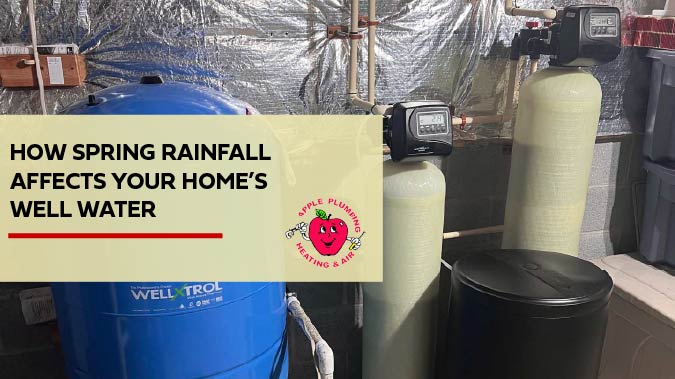
The good news is that modern water treatment systems can effectively address many of the water quality issues that become more common after heavy spring rainfall. Because every water supply is different, the best solution depends on the specific contaminants that are present in your water. This can only be determined through professional water testing.
Depending on your home’s water conditions, treatment recommendations may include:
Whole-home water filtration
Treats all of the water entering your home and can help reduce a broad range of contaminants, including sediment, chlorine, organic material, and certain chemicals that may enter water supplies after heavy rain.
Water softener installation
Removes excess minerals like calcium and magnesium that can increase as groundwater conditions shift seasonally.
Iron filtration systems
Targets elevated iron and manganese levels that may become more noticeable after periods of rainfall and groundwater disruption.
Sediment filtration
Captures dirt, sand, silt, and debris that can enter water systems through runoff or disturbed groundwater.
UV water treatment
Uses ultraviolet light to neutralize bacteria, viruses, and other microorganisms that may infiltrate vulnerable well systems after storms.
Reverse osmosis systems
Provide advanced filtration at individual taps and help reduce dissolved contaminants, such as nitrates, salts, heavy metals, and certain chemicals.
Even homes located in the same community can experience very different groundwater conditions. That’s why customized water treatment solutions are often the most effective way to maintain safe, reliable water quality year-round.
Protecting Your Water Quality During Maryland’s Rainy Season
While spring rainfall is a normal part of the season, the changes it can create in water conditions shouldn’t be ignored. This is the time to be proactive about having your well water tested and taking action against any concerning water issues.
At Apple Plumbing, Heating & Air, we’ve been helping Maryland homeowners protect their water quality for decades. Our team provides professional water testing and customized treatment solutions designed to help keep your water clean and reliable throughout the rainy season.Whether you’ve noticed changes in your water after heavy rainfall or simply want to stay ahead of seasonal water quality issues, we’re here to help. Contact us today to schedule your water test and find the right treatment solution for your home.