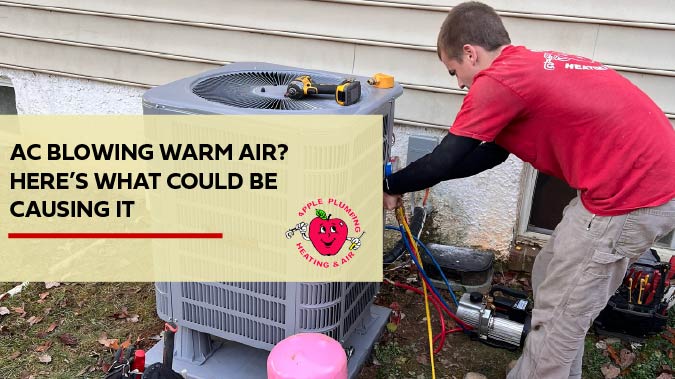
When temperatures start climbing in Maryland, your air conditioning system suddenly goes from occasional use to running almost every day. That’s usually when you notice whether your system is actually ready for the season ahead. If your AC is blowing warm air, struggling to cool certain rooms, or running constantly without lowering the temperature, it’s a sign that something isn’t working the way it should.
Understanding what causes these cooling problems can help you catch issues earlier and know when it’s time to schedule professional AC service. Apple Plumbing, Heating, & Air is here to help you do just that by breaking down the problems that could be causing your AC to blow warm air instead of cool.
Why Your AC Is Blowing Warm Air
Your air conditioner is designed to remove heat and humidity from inside your home and transfer it outdoors. When part of that cooling process stops working properly, your system may continue running without actually cooling your home effectively.
Sometimes you’ll notice the problem immediately because the air feels noticeably warm. Other times, the symptoms develop more gradually. Certain rooms may feel warmer than others, humidity levels may rise indoors, or your system may run longer than usual without ever reaching the thermostat setting.
Even if your AC still turns on normally, reduced cooling performance is often a sign your system is working harder than it should to keep up with demand.
Dirty Air Filters Can Restrict Cooling Performance
One of the most common causes of warm air problems is a dirty air filter. Over time, your filter collects dust, pollen, pet hair, and airborne debris that gradually restricts airflow throughout the system.
When airflow becomes limited, your AC has trouble moving enough air across the evaporator coil to cool your home efficiently. As airflow decreases, your system has to work harder and longer to maintain indoor comfort.
You may start noticing:
- Weak airflow from vents
- Longer cooling cycles
- Uneven temperatures between rooms
- Higher indoor humidity
Restricted airflow also increases wear on system components like the blower motor and evaporator coil. In more severe cases, airflow problems can even cause evaporator coils to freeze, which further reduces cooling performance.
Replacing your air filter regularly is one of the simplest ways to help your system operate more efficiently during the cooling season.
Refrigerant Problems Can Prevent Your Home From Cooling Properly
Refrigerant is what allows your AC system to absorb heat from inside your home and release it outdoors. If refrigerant levels become low, your system loses its ability to cool effectively.
Unlike fuel, refrigerant doesn’t get consumed during normal operation. If levels are low, it usually means there’s a leak somewhere within the system.
When refrigerant problems develop, you may notice:
- Warm or slightly cool air from vents
- Ice buildup on refrigerant lines
- Hissing or bubbling noises
- Your AC running constantly without cooling your home
Low refrigerant places additional strain on the compressor, which is one of the most expensive components in your AC system. If ignored for too long, what starts as a manageable repair can eventually lead to much larger system damage.
Because refrigerant systems operate under pressure and require specialized equipment, leaks and recharging should always be handled by a licensed HVAC professional.
Outdoor Condenser Problems Can Reduce Efficiency
Your outdoor condenser unit is responsible for releasing the heat removed from inside your home. If airflow around the condenser becomes restricted, your AC won’t be able to cool properly.
During spring and early summer, outdoor units often collect dirt, pollen, grass clippings, leaves, and other debris. Landscaping growth can also begin blocking airflow around the system without you realizing it.
When the condenser can’t release heat efficiently, your AC has to work harder to maintain indoor temperatures. That added strain often becomes more noticeable during hotter afternoons and humid weather.
Keeping the area around your outdoor unit clean and clear can help improve airflow and reduce unnecessary stress on your system.
Thermostat and Electrical Problems Can Interrupt Cooling
Sometimes the issue isn’t the AC equipment itself but the controls operating the system. Thermostat issues, electrical failures, worn capacitors, or damaged wiring can all interfere with cooling performance.
One common problem homeowners experience is when the indoor fan continues blowing air while the outdoor condenser fails to turn on. When this happens, air still moves through your vents, but it won’t actually be cooled.
Faulty thermostats can also cause inaccurate temperature readings or prevent your system from cycling correctly. Before assuming a major repair is needed, it’s always worth confirming your thermostat is set to “cool” and operating properly.
Frozen Evaporator Coils Can Stop Cooling Entirely
When airflow restrictions or refrigerant issues become severe enough, your evaporator coil can freeze over. Once ice develops on the coil, your system loses its ability to absorb heat properly, which can cause warm air to circulate through your home.
Frozen coils are often linked to:
- Dirty air filters
- Blocked airflow
- Refrigerant leaks
- Dirty evaporator coils
You may notice visible ice around refrigerant lines or water pooling near the indoor unit as the ice melts. Continuing to run the system while frozen can place additional strain on important components and increase the risk of larger repairs.
What You Can Check Before Scheduling AC Repair
While some cooling problems require professional diagnosis, there are a few simple things you can safely check before scheduling service.
Start by replacing your air filter if it’s dirty and making sure your thermostat is set correctly. Check that vents and registers throughout your home are open and unobstructed, and inspect the outdoor condenser for debris or landscaping that may be blocking airflow.
These basic checks can sometimes resolve smaller airflow-related issues or help narrow down the problem before a technician arrives.
Why You Shouldn’t Ignore Warm Air From Your AC
If your AC is blowing warm air now, the problem will usually become worse as outdoor temperatures continue rising. Even if your system still runs, operating while underperforming places additional strain on major components.
As cooling performance declines, your system often runs longer and consumes more energy trying to maintain indoor comfort. Over time, that added strain can shorten the lifespan of your equipment and increase the likelihood of a breakdown during the hottest part of the summer.
Ignoring early warning signs can eventually lead to:
- Higher energy bills
- Reduced cooling efficiency
- Increased wear on components
- More expensive repairs
- Unexpected system failures
Addressing cooling problems early is almost always less expensive than waiting until your AC stops working completely.
Seasonal HVAC Maintenance Helps Prevent Cooling Problems
Routine HVAC maintenance is one of the best ways to reduce the risk of unexpected AC problems during the summer months. Many cooling issues begin developing long before obvious symptoms appear.
A professional tune-up allows technicians to inspect airflow, refrigerant levels, electrical components, thermostat operation, and overall system performance before small issues turn into larger repairs.
Regular maintenance helps:
- Improve energy efficiency
- Reduce strain on system components
- Lower breakdown risks
- Extend equipment lifespan
Systems that receive seasonal maintenance generally perform more reliably during periods of heavy summer demand.
When It May Be Time to Replace Your AC
Not every warm air issue means your system needs replacement, but recurring cooling problems can sometimes point to larger issues with an aging AC system. If your air conditioner frequently needs repairs, struggles to cool your home evenly, or has become noticeably less efficient over time, replacement may eventually become the more practical long-term solution.
Older systems often have a harder time keeping up during extended periods of summer heat and humidity. As major components begin wearing down, many homeowners start dealing with:
- Higher energy bills
- Inconsistent cooling
- Longer run times
- Repeat repair visits
A professional inspection can help you determine whether continued repairs still make financial sense or whether upgrading to a new system would provide better long-term comfort, reliability, and efficiency. If replacement is the better option, Apple Plumbing, Heating & Air will help you navigate your options and make the best choice for your home.
And to make the process even less stressful for you, we provide free in-home estimates for new HVAC installation and can help you take advantage of instant utility rebates available on select high-efficiency HVAC systems.
Schedule AC Service Before Summer Heat Arrives
If you’ve already noticed your AC blowing warm air, it likely means there’s an issue with your system that’s going to become more noticeable as summer temperatures and humidity continue rising. Avoiding a breakdown during the hottest part of the season often comes down to how early you address the warning signs.
Our HVAC services at Apple, Heating, & Air include identifying cooling problems and completing repairs that restore your system’s functionality. We provide professional AC diagnostics, repair, maintenance, and replacement services designed around the real-world demands that Maryland summers place on cooling systems. Whether your AC is struggling with airflow restrictions, refrigerant issues, electrical failures, or declining performance, we’re ready to help. Contact us today and take steps to ensure your home stays cool throughout the coming months.