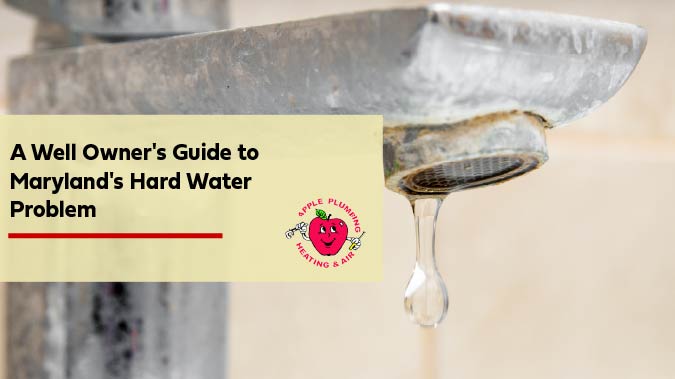
If your home relies on a private well in Maryland, hard water is likely one of the water quality issues you’re most familiar with. It’s a common problem here in Maryland, and the minerals responsible can slowly damage your plumbing system, reduce appliance efficiency, and increase your utility costs.
Understanding how hard water affects your home helps you make smarter decisions about protecting your plumbing. This guide explains the causes of Maryland’s hard water, the warning signs to watch for, and the best ways to address it.
What Is Hard Water and Why Is It So Common in Maryland?
Hard water is caused by elevated levels of naturally occurring minerals, primarily calcium and magnesium, that are picked up as water travels underground before reaching your well. Because much of Maryland sits on mineral-rich grounds, hard water is especially common for homeowners throughout Frederick County, Carroll County, and many surrounding areas.
Unlike municipal water systems, private wells deliver groundwater with its natural mineral content intact. While these minerals aren’t harmful to drink, they can create ongoing problems throughout your home’s plumbing system.
Over time, hard water commonly affects:
- Pipes and plumbing fixtures
- Water heaters
- Dishwashers and washing machines
- Faucets and showerheads
- Other water-using appliances
Many Maryland well owners don’t notice the effects of hard water until mineral buildup begins causing visible stains, reduced water pressure, or declining appliance performance.
Signs Your Well Water Hardness Levels Are Too High
When several signs of hard water begin appearing throughout your home, it’s likely time to address the problem.
You may notice:
- White mineral deposits around faucets and showerheads
- Cloudy spots on dishes and glassware
- Soap scum building up on tubs and sinks
- Dry skin and dull hair after bathing
- Stiff or faded laundry
- Reduced water pressure at taps
If you’ve noticed several of these symptoms, professional well water testing is the best way to confirm whether hard water is the cause. Testing also identifies other naturally occurring minerals or contaminants that may require additional treatment. This allows you to choose a solution based on your home’s actual water conditions.
How Hard Water Affects Your Plumbing System
While mineral stains are easy to see, the most expensive damage caused by hard water usually occurs inside your plumbing system. Each time water moves through your pipes, tiny amounts of calcium and magnesium remain behind. Over months and years, these minerals form scale that restricts water flow and reduces plumbing efficiency.
Why Your Water Heater Suffers the Most
Your water heater experiences some of the greatest effects because heat accelerates mineral buildup. Scale settles along the bottom of a traditional tank water heater or coats the heating elements inside electric models, creating an insulating barrier that makes the unit work harder. Even a relatively thin layer of scale can increase energy consumption while shortening the appliance’s lifespan.
Other water-using appliances face similar challenges. Dishwashers, washing machines, coffee makers, humidifiers, and ice makers all rely on small internal water passages that gradually become restricted by mineral deposits.
As buildup continues inside plumbing pipes, water flow decreases, and additional stress is placed on fixtures, valves, and plumbing connections. Treating hard water early helps prevent these problems from becoming costly repairs while extending the lifespan of your plumbing system and household appliances.
The Hidden Costs of Hard Water
Many homeowners view hard water as a cosmetic issue, but its financial impact often extends much further. The ongoing effects of mineral buildup increase household expenses in ways that aren’t always immediately obvious.
Hard water can increase your costs by:
- Raising energy bills because your water heater works harder
- Shortening the lifespan of appliances and plumbing fixtures
- Increasing plumbing maintenance and repair expenses
- Requiring more soap, detergent, shampoo, and cleaning products
- Leaving stubborn mineral stains that require additional cleaning
Addressing hard water before significant scale develops helps lower long-term household costs while improving efficiency throughout your home. Investing in the right treatment solution often saves money over time by protecting the systems and appliances you rely on every day.
Choosing the Right Water Treatment Solution for Your Well
Every private well is different, which means selecting the right treatment system begins with understanding your home’s water quality. Professional water testing measures hardness levels while identifying other naturally occurring minerals such as iron, manganese, sulfur, or sediment that may require additional treatment.
Why Water Testing Comes First
Testing removes the guesswork from choosing water treatment equipment. Instead of purchasing a system based on assumptions, you’ll know exactly what your water contains and which solution will provide the greatest benefit.
Before selecting a treatment system, consider:
- Your home’s water hardness level
- Household size and daily water usage
- Additional water quality concerns
- Maintenance requirements
- Long-term operating costs
For many Maryland well owners, a properly sized water softener offers the most effective solution for reducing calcium and magnesium. Through an ion exchange process, the system removes hardness minerals before they circulate through your plumbing, helping prevent scale buildup while improving soap performance and appliance efficiency.
Some homes benefit from combining a water softener with whole-home filtration. If your well contains sediment, iron, or sulfur, additional filtration provides more comprehensive protection and improves overall water quality.
Routine maintenance is equally important. Water softeners require periodic salt replenishment, while filtration systems need regular filter replacements to continue operating efficiently. Proper maintenance ensures your treatment system continues protecting your plumbing for years to come.
Protect Your Well Water System With Apple Plumbing
Hard water is a common challenge for Maryland well owners, but it doesn’t have to lead to expensive plumbing problems. Recognizing the signs early and choosing the right treatment solution can protect your plumbing system, improve water quality, and extend the life of your appliances.
Our team at Apple Plumbing, Heating, and Air proudly serves homeowners throughout Frederick County and Carroll County with dependable plumbing and water treatment solutions tailored to their needs.
If you’re ready to protect your home from hard water, contact Apple Plumbing today to schedule an evaluation.